Fire rated glass and door systems are among the most reliable options to enhance safety, adhere to the building codes, and improve contemporary design in virtually every kind of construction. They offer safety from fire with durability, transparency, and adaptability to commercial, residential industrial, and residential buildings.
What is fire-rated glass and doors?
Door and glass assemblies are tested systems – glass frames, frames, and seals – that are made to ward off smoke, flames as well as heat, for a certain duration, typically between 20 and 120 minutes. In contrast to normal glazing, fire-rated glass is designed to keep its integrity even at extreme temperatures, ensuring that the escape routes and compartments are safe in the event of a fire.
There are two primary performances: fire-protective that stops the spread of smoke and flames, and fire-resistant glass that reduces heat transfer. Selecting the appropriate type of glass depends on the wall’s rating, place of installation (corridor or stairway atrium and shaft) and the code’s specifications.
Why ideal for every project?
Fire rated glass and door systems are suitable for schools, hospitals, offices, retail, high‑rise, hotels, factories, and even high‑end homes because they deliver both safety and design flexibility. They fit into fire doors, internal partitions, lobbies, stair enclosures, lift surrounds, and external facades with appropriate specifications.
Benefits that make fire rated glass and door ideal across projects include:
- Life‑safety performance by slowing fire and smoke and protecting escape routes.
- Compatibility with many sectors and occupancy types, from public buildings to private developments.
- Availability in multiple ratings (20, 45, 60, 90, 120 minutes) to match different risk levels and code demands.
Key benefits for designers and owners
Fire rated glass and door solutions let projects meet strict fire regulations while keeping spaces open and bright. Large glazed areas maintain sightlines and natural light in corridors and lobbies, improving comfort without sacrificing safety.
Additional advantages include:
- Energy efficiency: many fire rated glasses also reduce heat transfer, supporting better thermal performance and lower energy use.
- Acoustic and security options: systems can combine fire resistance with sound control, impact resistance, and privacy when required.
- Durability and low maintenance: high‑quality fire rated doors are built for intensive daily use and long‑term performance.
Compliance and specification
Using certified fire rated glass and door systems helps projects comply with building and fire codes governing compartmentation, escape routes, and fire barriers. Assemblies are tested as complete units, so frames, hardware, glazing, and seals must all match the tested and listed configuration for the stated rating.
Correct specification considers:
- Required fire rating and whether exposure is from one or both sides.
- Location in the building (partition, exit enclosure, shaft, atrium, facade) and any smoke or temperature‑rise limits.
- Approved manufacturers and certification schemes that verify integrity, radiation control, and insulation performance.
Benefits of using fire rated glass and door in commercial buildings
Life safety and evacuation
- Fire rated glass and door assemblies slow the spread of flames, smoke, and hot gases, creating protected escape routes in corridors, stairwells, lift lobbies, and exit enclosures.
- By maintaining visibility through transparent glass, they help occupants and first responders see conditions clearly and navigate safely during evacuation.
Property and business protection
- Containing a fire within a compartment reduces damage to equipment, inventory, documents, and fit-out, lowering repair costs and downtime.
- Stable, rated doors and glazed partitions limit fire movement across large floor plates, which is critical in open-plan offices, malls, and industrial facilities.
Code compliance and insurance benefits
- Commercial buildings are legally required to use fire rated assemblies in specific locations like escape routes, fire compartments, and service shafts; certified fire rated glass and door systems simplify compliance with these regulations.
- Demonstrating strong passive fire protection can support better relationships with authorities and may help reduce insurance premiums by lowering overall fire risk.
Design, comfort, and functionality
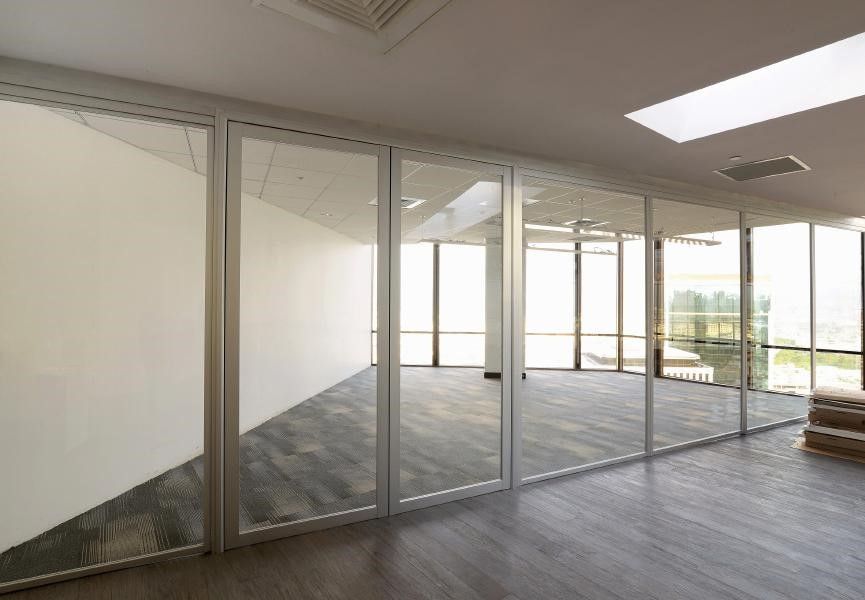
- Modern fire rated glass and door solutions provide high transparency with slim steel or aluminum frames, so designers can keep lobbies, corridors, and offices bright and visually connected without compromising fire safety.
- Many systems offer added performance such as acoustic control, thermal insulation, and privacy options, which improves comfort in meeting rooms, hospitals, educational facilities, and premium office spaces.
Operational reliability and long-term value
- Fire rated commercial doors are engineered for heavy daily use, combining robust frames, hardware, and glazing that maintain performance over many years with proper maintenance.
- By reducing the potential severity of fire incidents, these systems help businesses recover faster after emergencies and protect brand reputation, making them a cost-effective part of overall risk management.
Frequently Asked Questions (FAQs)
- What is the difference between normal glass and fire rated glass and door?
Standard glass fails quickly under high heat, while fire rated glass and door assemblies are tested to resist fire, smoke, and often heat for a defined time to maintain a safe barrier. - How long can fire rated glass and door resist fire?
Common ratings are 20, 45, 60, 90, and 120 minutes, with the required duration depending on local codes and the wall or opening where the assembly is installed. - Can fire rated glass and door be completely transparent and stylish?
Yes, modern systems use clear fire rated glazing and slim steel or aluminum frames to provide a contemporary look while still meeting required fire ratings. - Where should fire rated glass and door be used in a building?
Typical locations include stair enclosures, corridors, lobbies, compartment walls, lift surrounds, and areas protecting escape routes or high‑risk rooms. - Do fire rated doors still work if only the glass is fire rated?
No, the door, frame, glass, hardware, and seals must be tested and certified together; mixing non‑rated components can cause failure and code non‑compliance. - Are fire rated glass and door systems more expensive?
Initial costs are higher than standard doors and glazing, but they reduce fire risk, support legal compliance, and can add value and longevity to the building.